Hello,Welcome to Normal Website!

Service hotline400-6177-880
<b id="k9gkf"><menuitem id="k9gkf"></menuitem></b>
<b id="k9gkf"><menuitem id="k9gkf"></menuitem></b>
Hello,Welcome to Normal Website!
Service hotline400-6177-880

Contact US
Tell:+86-571-85691658
Fax:+86-571-28867000
E-mail:[email protected]
Address:North block, 9 block,, Jiangling, Binjiang District, Hangzhou, Zhejiang

Toys, Hard Goods & Furnitu

CE certification for protective gloves
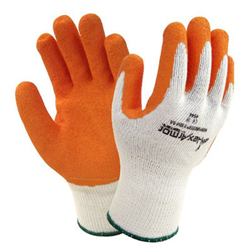
NormalTCI can provide one-stop CE certification/testing services for protective gloves.
Since 1995, products used to protect users from health and safety hazards must bear the CE mark in order to be sold on the European Community market (EC). This type of product is called personal protective equipment (PPE). The Directive on Personal Protective Equipment EU 89/686/EEC stipulates the requirements for the CE marking of PPE and the regulations and procedures for its sale in the market, including a series of all health and safety requirements to be complied with. The CE mark represents the manufacturer's declaration that their product complies with the requirements of this directive.
CE mark:
The instruction classifies PPE into three categories based on the risk level intended to be protected by the product: Category I PPE only protects against mild risks, such as gardening gloves. Class II PPE protection with moderate risk, such as mechanical gloves. Class III PPE protects against severe risks, such as fire gloves. All categories of PPE must be tested according to the corresponding standards to demonstrate compliance with the requirements of the PPE directive. Class II and III PPE products must also be certified by designated organizations.
Steps for CE marking certification of protective gloves
Protective gloves should be tested according to the "General Requirements and Testing Methods for EN420 Protective Gloves" standard. In addition, depending on the ultimate use of the gloves, other standards may also need to be applied, such as gloves designed for mechanical risks, and EN388 Gloves for Mechanical Risk Protection.
The tests conducted according to the above standards also include evaluations of protective performance, durability, and user comfort. The number of samples required for testing depends on the nature of the product, but in general, testing based on the above two standards requires a maximum of 11 pairs of the largest size products, as well as one pair of each size and one A4 sized sample of each material.
The European standards for protective gloves include:
EN374- Chemical and Microbial Protective Gloves
EN388- Mechanical protective gloves
EN407- Heat resistant (hot and/or fire) gloves
EN420- General Requirements and Testing Methods for Protective Gloves
EN421- Protective gloves against ionizing radiation and radioactive contamination
EN511- Antifreeze Gloves * - EN659 Fireproof Gloves
EN12477- Welding protective gloves
Technical Documentation
After successfully passing the relevant tests, technical documents need to be written and evaluated by institutions designated by member state governments for EU assessment. The designated organization has the authority to issue EC type test certificates, which are licenses for products with CE markings. The designated institution will keep the relevant technical documents for at least 10 years after the product is launched for sale.
Technical documents are a set of documents that include:
The specific content of the product that meets health and safety requirements
? Technical specifications of the product
? Detailed information on suppliers of related components
? Test results
? Quality control procedures
After the technical documents have successfully passed the evaluation, a document called "EC Declaration of Conformity" must be submitted to the designated agency. This is a legally binding document declaring that its products comply with the requirements of the PPE Directive. If there are any changes to the product, further testing and re certification must be conducted.
It should be noted that all products require a Declaration of Conformity, even Class I products are no exception.
Other regulations
In addition to the CE mark, relevant standards also require other types of marks to be attached to products or packaging. Each product sold must have information prompts that explain to users the protection provided by the product, as well as other information such as care guidelines.
In addition to the PPE directive, protective gloves also need to comply with other EU directives, such as the Azo Directive 2002/61/EC. This directive restricts the use of certain dyes in textiles and leather as they may produce carcinogens in certain situations. The product needs to undergo relevant testing to demonstrate compliance with requirements.
Household oven insulated gloves - CE certification mark
Personal protective equipment (PPE) refers to equipment designed and manufactured for individuals to wear or hold, to prevent one or more risks to health and safety. After the approval of EU Regulation 2016/425, household oven insulated gloves and finger gloves have been listed as personal protective equipment. According to the level of risk, this product is classified as Class II personal protective equipment. Therefore, before selling this product within the European Union, it must carry the CE certification mark and a conformity assessment issued by a designated agency.
April 21, 2018- According to legal requirements, all new products launched on the market must comply with the 2016/425 EU regulations. Previously, according to Directive 89/686/EEC, this product was not classified as personal protective equipment.
Note: If a product bears the logo of a retailer, the retailer is considered the manufacturer of the product (the enterprise that places the product on the market), therefore, the supply chain only begins after they sell the product to individual customers. The inventory in the warehouse/distribution center is not yet part of the supply chain, therefore, products cannot be sold after April 20, 2018 unless they carry the CE certification mark and have a conformity assessment.
Oven gloves and finger gloves, as Class II products, must be certified by a designated organization before they can be sold within the European Union. Attachment 5 lists the necessary standards for EU type testing of Class II products (Module B), while Attachment 6 specifies the types that comply with internal production control (Module C). The validity period of the EU type inspection certificate issued according to module B in Annex 5 is five years.
Please consult NormalTCI for specific questions
National Unified Service Hotline: 400-6177-880
Email: [email protected]
Copyright @ 2015 NORMAL (HANGZHOU) TESTING & CERTIFICATION CO., LTD.
Tell:+86-571-28906690 E-mail:[email protected] Service Hotline:400-6177-880 Fax:+86-571-28867000
If you have any comments on the website, please email to:[email protected]
<b id="k9gkf"><menuitem id="k9gkf"></menuitem></b>
<b id="k9gkf"><menuitem id="k9gkf"></menuitem></b>